
Every family deserves fresh, clean, safe air in their home. This is why more households are investing in air purification systems to support their family’s health and improve their indoor environment. With more washable filter options now available, choosing between a washable filter and a HEPA filter has become an important consideration for many homeowners.
Whether it’s the mechanics of the filtration system itself or the maintenance of both devices, this article will take both into account alongside the long-term impact on your wallet and the planet. Our goal is to help you understand the real differences so you can choose the air purifier that best fits your family's needs.
Why Indoor Air Quality Matters More Than Ever

When people think about air pollution, they often picture traffic, factories, or smog outdoors. In reality, however, most of us spend surprisingly little time outside. According to the U.S. Environmental Protection Agency (EPA), Americans spend about 90% of their time indoors, making the quality of indoor air more important than many people realize.
Everyday activities such as cooking, cleaning, burning candles, or simply opening windows can introduce dust, pollen, pet dander, mold spores, smoke, and other airborne particles into your home. Over time, these pollutants can affect comfort and overall indoor air quality, especially for families with young children, pets, allergy sufferers, or anyone working from home.
Choosing the right air purifier isn't simply about buying another household appliance—it's about creating a healthier indoor environment where you and your family spend most of your day.
How Do the Two Systems Work?
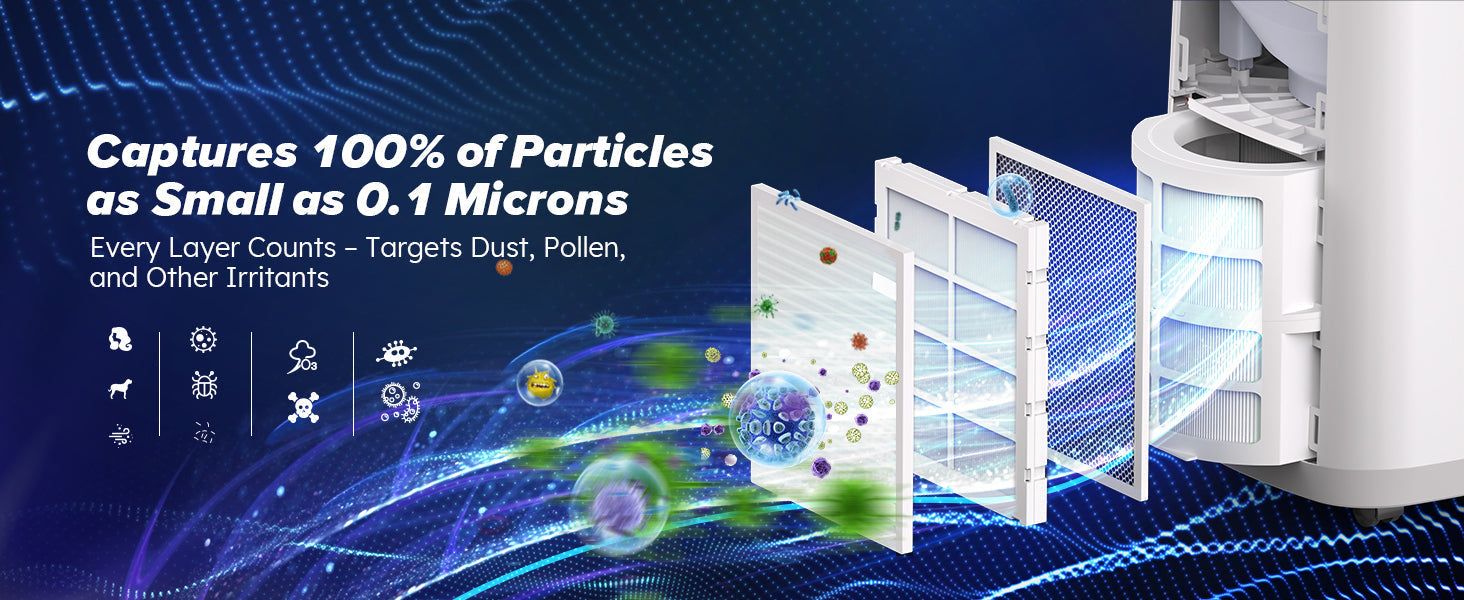
The most important part of comparing washable filter vs HEPA filter systems is understanding how each filtration system works.
A traditional HEPA filtration system is designed to capture extremely small airborne particles with high efficiency. Depending on the manufacturer and how frequently the purifier is used, HEPA filters typically need to be replaced every 6 to 12 months, although some households with pets or heavy usage may replace them more often.
A washable filter system takes a different approach. Instead of regularly replacing disposable filters, the filter is designed to be cleaned and reused. Modern washable filtration technology can effectively capture extremely fine airborne particles while eliminating the ongoing cost of purchasing replacement filters. Most air purifiers with washable filters will notify you when it's time to clean the filter, typically every three to six months, making maintenance simple and predictable.
One of the biggest advantages of a washable filter is that it turns filter maintenance into a routine rather than an ongoing expense. Instead of remembering to order replacement filters throughout the year, you simply clean the existing filter and continue using it.

Neither system is automatically the right choice for everyone. Your decision should depend on your budget, maintenance preferences, and how long you expect to use your air purifier.
HEPA Systems Can Prove More Costly
At first glance, an air purifier with a washable filter may seem more expensive than one using a standard HEPA filter. However, looking only at the purchase price doesn't tell the whole story.
One of the hidden costs of many HEPA air purifiers is the ongoing expense of replacement filters. Depending on the model, a replacement filter can cost around $50 or more. Even if your household only replaces the filter twice a year, those costs quickly add up over the lifetime of the appliance.
By comparison, a washable filtration system eliminates this recurring expense. While the initial investment may be higher, many households find that the savings on replacement filters gradually offset the higher purchase price. For families planning to use an air purifier for several years, this can make a washable filter system a more economical long-term choice.
Of course, cost isn't the only factor worth considering. Convenience, maintenance, and environmental impact all play an important role when choosing the right air purifier for your home.
Which Filter Is Better for Different Households?
When choosing between a washable filter vs HEPA filter air purifier, there is no single answer that works for every household. The best option depends on your lifestyle, your indoor environment, and how often you plan to use your air purifier.
For Families With Pets
Pet owners often deal with more than just visible pet hair. Cats and dogs can release dander, small skin particles, and other airborne allergens that may circulate throughout the home.
For households with pets, regular air purification is especially important. A washable filter can be a convenient option because it allows homeowners to maintain their filtration system without continuously purchasing replacement filters. Being able to clean and reuse the filter makes it easier to keep up with regular maintenance, especially in homes where the purifier runs every day.
For Allergy Sufferers
People who experience seasonal allergies are often more aware of the importance of maintaining good indoor air quality. Common household particles such as pollen, dust, and mold spores can enter indoor spaces and affect daily comfort.
While both HEPA and washable filtration systems can help reduce airborne particles, the most important factor is choosing an air purifier that you can maintain consistently. A clean filter allows the purifier to continue operating effectively, which is why simple maintenance is such an important part of long-term performance.
For Everyday Family Use
For many families, an air purifier is not something they use occasionally—it becomes part of their daily home routine. Whether it is running in the bedroom overnight, helping freshen the living room, or improving air quality while cooking, convenience matters.
This is where washable filters offer a unique advantage. Instead of tracking replacement schedules and ordering new filters, homeowners can simply clean the filter when needed and continue using the same system.
Washable Filters Are More Sustainable

Another important difference between washable filter vs HEPA filter systems is their environmental impact.
Disposable filters need to be replaced regularly, which means households may throw away multiple filters throughout the lifetime of an air purifier. While replacement filters are necessary for many systems, this ongoing waste is something more consumers are beginning to consider when making purchasing decisions.
A washable filter provides a more sustainable alternative because the same filter can be cleaned and reused repeatedly. Instead of replacing the filter every few months, users can maintain it through regular cleaning and only replace it if the filter becomes damaged.
For consumers who are looking for ways to reduce household waste, choosing a reusable filtration system can be a small but meaningful step toward a more sustainable lifestyle.
Beyond Filtration: Why Ozone Emissions Matter
When selecting an air purifier, filtration performance is not the only factor worth considering. Another important element that many consumers overlook is ozone emissions.
Some air purification technologies can generate ozone as a by-product, and excessive ozone levels may negatively impact indoor air quality. This is why ozone testing and safety standards are an important consideration when choosing a purification system for your home.
The NuWave Forever Smart Air Purifier has been tested to emit less than 1 part per billion (ppb) of ozone, meeting even the strict California ozone emissions limit. This level is also significantly below the EPA outdoor ozone standard of 70 ppb, providing additional peace of mind for families who use their air purifier regularly.
For households that prioritize both clean air and safety, looking beyond just particle filtration can help ensure they choose a complete air purification solution.
Maintenance Becomes Part of Your Routine
One of the biggest concerns consumers have about washable filters is whether cleaning them is complicated. In reality, maintaining a washable filter is often much easier than many people expect.
Most washable filters only need occasional cleaning. When the filter requires maintenance, users can simply remove it from the air purifier, rinse away accumulated dust and particles, and allow it to dry completely before placing it back into the appliance.
Regular cleaning, usually every three to six months depending on usage and indoor conditions, helps maintain the purifier’s performance and ensures the system continues operating efficiently.
For many families, spending a few minutes cleaning a reusable filter is more convenient than remembering to purchase replacement filters throughout the year.
The NuWave Forever Smart Air Purifier simplifies this process even further with smart monitoring features that help users understand when maintenance is needed. Its companion app allows homeowners to monitor air quality, adjust settings, and receive notifications when it is time to clean the washable filter.
With multiple operating modes, different fan speed settings, and automatic air quality sensors, the purifier can adapt to changing conditions inside your home. Instead of manually guessing when your air needs attention, the system helps make maintaining cleaner indoor air a simpler part of your everyday routine.
Long-Term Cost Comparison: Looking Beyond the Initial Price
When purchasing an air purifier, it is easy to focus only on the upfront price. However, the true cost of ownership often comes from what happens after the purchase.
A lower-priced air purifier may require regular replacement filters, while a washable filter system may require a higher initial investment but fewer ongoing expenses. Looking at the long-term cost can help families make a more informed decision.

The actual cost will vary depending on the model, usage frequency, and replacement schedule. However, for households that run their air purifier regularly, avoiding repeated filter purchases can create meaningful savings over time.
This is one of the reasons why many consumers are looking beyond the initial purchase price and considering the long-term value of their appliances.
Washable Filter vs HEPA Filter: Choosing the Right Air Purifier for Your Home
Ultimately, choosing between a washable filter vs HEPA filter comes down to understanding your household needs.
HEPA air purifiers remain a popular choice because they are a proven filtration technology and can be a good option for many homes. However, they also come with ongoing replacement costs and generate more disposable filter waste over time.
For families looking for a long-term solution with easier maintenance and reduced recurring expenses, an air purifier with a washable filter can be an appealing alternative.
A reusable filtration system allows homeowners to focus less on replacement schedules and more on maintaining a cleaner indoor environment. When combined with features such as smart monitoring, air quality sensors, and customizable settings, a washable filter air purifier can become a convenient part of everyday home care.
The NuWave Forever Smart Air Purifier was designed with these needs in mind. By combining washable filtration technology with smart features, it helps families maintain better indoor air quality while reducing the inconvenience and cost associated with frequent filter replacements.
Good for your home, good for your budget, and a more sustainable choice for the future.


Leave a comment
This site is protected by hCaptcha and the hCaptcha Privacy Policy and Terms of Service apply.